

WiFi Hotshots — Multi-CCIE Engineering Bench Across 10 Networking Disciplines
WiFi Hotshots (LA Wireless LLC) is an engineering services firm built on Ekahau ECSE, multi-CCIE, BICSI RCDD, and CWNE credentials, run from Valencia, California with national dispatch capability. Wireless, Campus LAN, Data Center fabric, SD-WAN, Network Security, Unified Communications, Structured Cabling, AI-Ready Infrastructure, Validation Testing, and Managed Services — all delivered on fixed-fee SOWs with the same engineer scoping, designing, deploying, and validating each engagement.
Ekahau ECSE — Certified Survey Engineer on every wireless engagement
Multi-CCIE engineering bench
Fixed-fee SOW — no T&M surprises
25 years of enterprise networking leadership — minority-owned
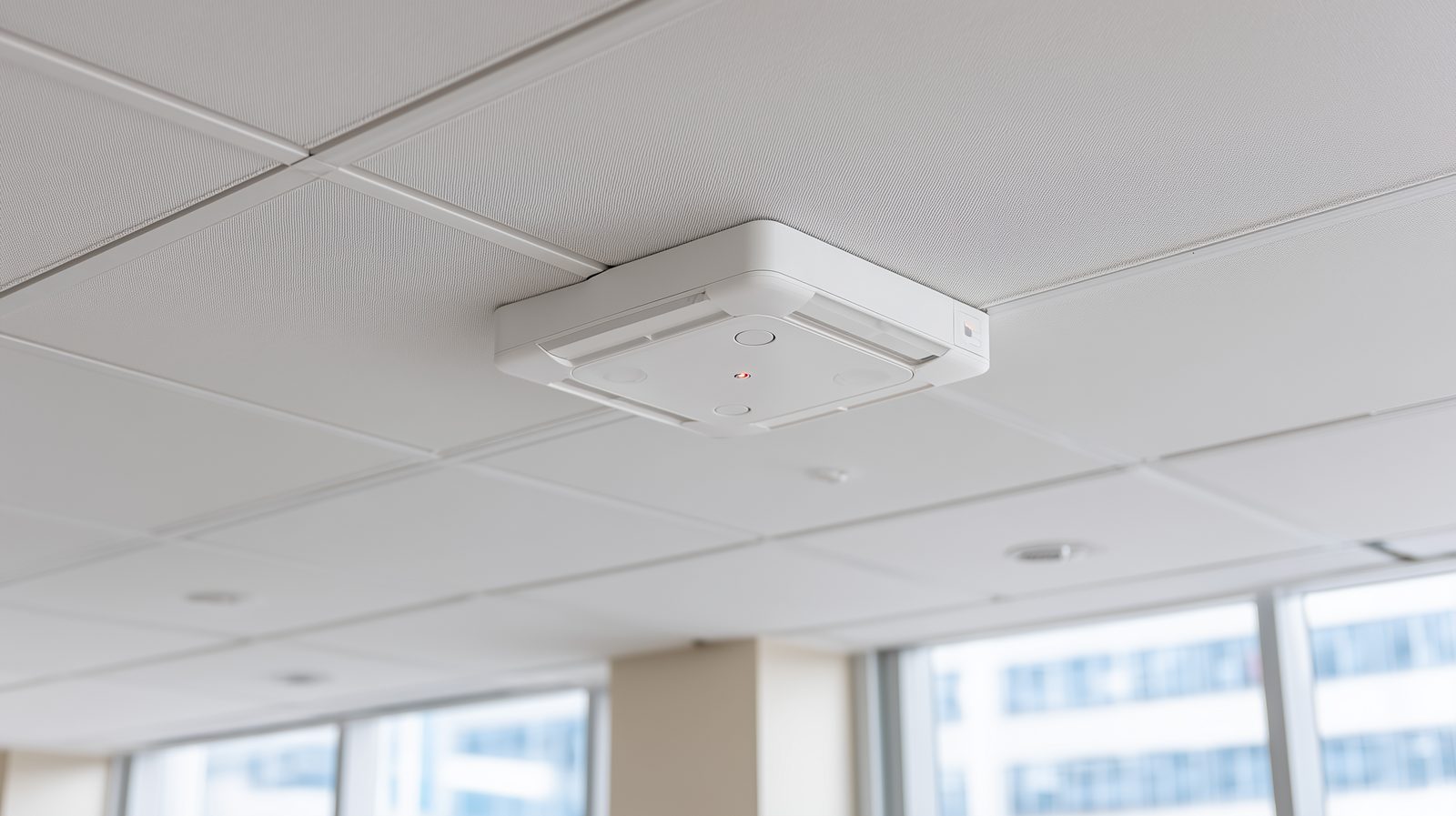
WiFi Hotshots is the trade name of LA Wireless LLC, an engineering services firm headquartered at 23890 Copper Hill Drive, #148, Valencia, CA 91354. The bench delivers ten networking disciplines on fixed-fee SOWs, with primary-source citations on every methodology page and FAQPage schema deployed across the site. Reach the engineering team at sales@wifihotshots.com or (844) 946-8746, or send floor plans, switch inventories, and topology diagrams through the project intake form.
Who Engages WiFi Hotshots
The WiFi Hotshots engineering bench is engaged across four primary models, and the engineering deliverable — the Ekahau predictive design, the AP-on-a-Stick validation report, the EVPN-VXLAN fabric design document, the SD-WAN cutover runbook, the BICSI RCDD-signed cabling drawing — is the same in every one of them.
- End-customer direct. Enterprises that engage WFHS directly for network engineering work — the Fortune 100 social platform headquarters campus, the academic medical center, the tier-1 financial services firm, the public university system, the K-12 districts. The contract is between the client and LA Wireless LLC; the engineering team scopes, designs, delivers, and validates the engagement against a fixed-fee SOW.
- VAR partner co-delivery. Value-added resellers and authorized partners regularly bring WFHS in as the engineering arm on engagements where the procurement contract sits with the VAR — the partner handles hardware fulfillment, financing, and the customer relationship; WFHS handles the engineering scope (Ekahau survey, design, runbook, validation, training). The partner engagement model details how the SOW is structured and how the credit lands. We sign mutual NDAs and are comfortable behind a partner’s brand on the deliverable cover page when that’s what the engagement requires.
- Integrator subcontract. Large national integrators subcontract WFHS for credentialed engineering work that exceeds their internal bench depth — multi-CCIE wireless redesigns, Ekahau ECSE-Troubleshooting on-site remediation, BICSI RCDD-signed cabling design, EVPN-VXLAN data-center fabric stand-ups, NIST CSF 2.0-mapped security architecture. The integrator owns the customer; we deliver the engineering against the integrator’s project plan and timelines.
- Federal, E-Rate, and supplier-diversity procurement. WiFi Hotshots is minority-owned, which makes the firm eligible for supplier-diversity procurement programs at Fortune 500s, federal agency subcontracts, and K-12 E-Rate engagements where minority-owned business participation is a contracting requirement. We staff every engagement with the same engineering credentials regardless of the procurement vehicle.
Whichever engagement model fits, the engineer who scopes the work is the engineer who delivers it. There is no separate sales engineering team that hands off to an unrelated delivery team. The same Ekahau ECSE-certified engineer who builds the predictive model walks the AP-on-a-Stick survey and signs the post-install validation report; the same multi-CCIE engineer who designs the EVPN-VXLAN fabric writes the cutover runbook and runs the migration window. That continuity is what fixed-fee SOW pricing is built on.
Ten Disciplines on One Engineering Bench
WiFi Hotshots delivers ten networking disciplines, and the multi-CCIE bench carries depth in each. The list below is the practice scope, not a marketing menu — each discipline links to its methodology hub with the platforms, standards, and primary-source citations the engineering team works against day to day.
1. Wireless
Ekahau ECSE-certified predictive design in Ekahau AI Pro with on-site validation using the Ekahau Sidekick 2 across 2,400–7,125 MHz. Wi-Fi 6E and Wi-Fi 7 (IEEE 802.11be approved September 26, 2024, published July 22, 2025) design across Cisco Catalyst 9800, Meraki, HPE Aruba (Aruba Central / AOS-CX controllers), Juniper Mist, RUCKUS, and Extreme. Predictive, AP-on-a-Stick, and post-install validation surveys with heatmap exports per band per floor. Wireless engineering services covers the methodology in depth.
2. Campus LAN
Cross-vendor campus refresh evaluation across Cisco Catalyst 9300/9400/9500 (IOS-XE 17.x with SD-Access), HPE Aruba CX 6300/8325 (with VSX and Active Gateway), Juniper EX4400/EX4650 (Mist Wired Assurance), and Arista campus platforms. PoE budgeting against IEEE 802.3bt Type 4 (90W PSE / 71W PD, ratified September 2018), MACsec line-rate at the access layer, and stacking topology decisions. Vendor-anonymized scoring matrix separates engineering criteria from procurement criteria. Campus LAN engineering services details the platform comparison framework.
3. Data Center Fabric
EVPN-VXLAN fabric engineering on Cisco Nexus 9000 with NDFC, Arista 7050X3/7060X6/7280R4 with CloudVision, and Juniper Apstra-managed multi-vendor underlays. The protocol is the standard — IETF RFC 7348 (VXLAN), RFC 7432 + RFC 8365 (BGP EVPN signaling) — so the platform decision tracks operator skill, automation tooling, and lifecycle, not the protocol. Data center fabric engineering services covers the design framework and target deliverables.
4. SD-WAN
SD-WAN engineering across Cisco Catalyst SD-WAN (vManage / vSmart / vBond / OMP control plane), Fortinet Secure SD-WAN (ADVPN 2.0 with SoC4/NP7 silicon to avoid the TLS-inspection throughput cliff), Versa for multi-tenant SASE and MSP overlays, Aruba EdgeConnect (Forward Error Correction and Business Intent Overlays), and Meraki MX for smaller estates. Four-week transport audit precedes the platform recommendation. SD-WAN engineering services covers the cutover methodology.
5. Network Security
Security architecture mapped to NIST Cybersecurity Framework 2.0 (released February 26, 2024, six core functions including the new Govern function) and cross-referenced to NIST SP 800-207 zero-trust tenets. Microsegmentation, NGFW sizing (Palo Alto, Fortinet, Cisco Secure Firewall), NAC posture (Cisco ISE, Aruba ClearPass), ZTNA migration, and SIEM integration. Compliance overlays for PCI DSS, HIPAA, CMMC, and NY DFS Part 500 layered on top of the CSF 2.0 structural map. Network security engineering services details the framework alignment.
6. Unified Communications
Cloud UC migration design across Webex Calling (Local Gateway requires Cisco IOS-XE 17.6.1a or later, 17.12.2 recommended), Microsoft Teams Phone Direct Routing (SIP-TLS on TCP 5061, media UDP 3478-3481 + 49152-53247 through the SBC), and Zoom Phone (BYOC-Cloud and BYOC-Premises peering models). E911 compliance under Kari’s Law (47 U.S.C. § 623, effective February 16, 2020) and RAY BAUM’s Act Section 506 designed into every dial plan. Unified communications engineering services covers the SBC architecture and codec discipline.
7. Structured Cabling
BICSI RCDD-signed cabling design against TIA-568.2-E (cabling components and performance), TIA-569 (pathways and spaces), TIA-606-D (administration, published October 2021, four Administration Classes), TIA-607 (bonding and grounding), TIA-942-C (data center infrastructure, Rated-3 / Rated-4, published May 2024), and BICSI TDMM 15th Edition (released January 2024). Permanent-link certification with Fluke DSX-8000 against ANSI/TIA-1152-A Level 2G to 2000 MHz for warranty-grade Cat 6A and Cat 8 reports. Structured cabling engineering services details the design and certification deliverables.
8. AI-Ready Infrastructure
GPU fabric engineering across the three viable paths: NVIDIA InfiniBand (Quantum-X800 Q3400 chassis, 144 ports of 800 Gb/s XDR, SHARP v4 collective offload), NVIDIA Spectrum-X (Spectrum-4 SN5600 at 51.2 Tbps in 2RU, RoCEv2 ASIC tuned for training), and Arista Etherlink (7060X6 at 700 ns and 51.2 Tbps low-latency leaf, 7280R4 deep-buffer leaf, 7800R4 spines) — forward-compatible with the Ultra Ethernet Consortium 1.0 specification published June 11, 2025. The fabric path is matched to GPU count, operational team, and the eventual UEC migration roadmap. AI-ready infrastructure engineering services covers the fabric selection framework.
9. Validation Testing
Independent validation engagements where the firm performing the validation is not the firm that designed or installed the work. Cabling permanent-link certification with the Fluke DSX-8000 (ANSI/TIA-1152-A Level 2G, IEC 61935-1 Edition 5 Level VI, to 2000 MHz). Multi-gig Ethernet qualification with the NetAlly LinkRunner 10G (10M through 10G on RJ-45, LANBERT media qualification — explicitly qualification, not TIA certification). Wi-Fi post-install with the Ekahau Sidekick 2 against the original predictive design. Circuit hand-off against IETF RFC 2544, RFC 6349, or ITU-T Y.1564 depending on the auditor or carrier requirement. Validation testing engineering services details the independence model and tools.
10. Managed Services
Managed services NOC operating ITIL 4 underneath with Google SRE error-budget practice on top. Tier 1 alert triage and pre-approved standard changes; Tier 2 with CCNP/JNCIP/ACE-P credentials authoring RCAs and normal-change designs; Tier 3 with CCIE/JNCIE/CWNE/ACE-E credentials writing 5-business-day RCAs and authoring automation. SLOs defined as named SLIs (e.g., percent of one-minute intervals where end-to-end WAN loss is below 0.1% as measured by ThousandEyes probes). Telemetry on gNMI with TLS 1.2+ at sub-second cadence on Cisco IOS-XE 17.6+, Junos 23.x+, Arista EOS 4.30+; SNMPv3 fallback. Source of truth in NetBox 4.0 or Nautobot 2.2 hosted in the client’s own Git. Offboarding is a documented procedure, not a negotiation. Managed services engineering details the operational maturity model.
Why Every WiFi Hotshots Methodology Page Cites Primary Sources
Every technical claim on this site traces back to a primary source — the IEEE standard, the IETF RFC, the NIST publication, the FCC rulemaking, the ITU-T recommendation, the BICSI manual, or the vendor admin guide. That is the standard the engineering team holds itself to internally, and it is the standard the published methodology pages reflect.
A reader with a network engineering background can verify any claim in five seconds. IEEE 802.11be Wi-Fi 7 was approved September 26, 2024 and published July 22, 2025 — verifiable at standards.ieee.org/ieee/802.11be/7516/. NIST CSF 2.0 was released February 26, 2024 — verifiable at the NIST press announcement. The Ultra Ethernet Consortium Specification 1.0 was published June 11, 2025 — verifiable at ultraethernet.org. Citing forward to the standard rather than restating a fact eliminates the chain of attribution drift that turns a vendor blog into a marketing piece into a service description that no longer matches what the protocol actually does.
For our buyers, the practical effect is that the methodology page you read on this site is the same methodology the engineer applies on the engagement. The cabling page cites TIA-568.2-E, TIA-569, TIA-606-D, TIA-607, TIA-942-C, and the BICSI TDMM 15th Edition because the BICSI RCDD on the deliverable signs against those standards. The wireless page cites the Cisco Enterprise Mobility 4.1 VoWLAN Design Guide, FCC 15.407 DFS rules, NISTIR 6055 reinforced-concrete attenuation data, and Ekahau’s published Sidekick 2 specifications because the predictive model and the validation report are built on those references. The disciplines covered on this page each carry the same source-citation rigor on their respective methodology hubs.
Twenty-Five Years in Enterprise Networking — Minority-Owned, Valencia-Based
WiFi Hotshots was founded in 2019 as the trade name for LA Wireless LLC, but the engineering leadership behind the firm carries 25 years of experience designing, deploying, and operating enterprise networks at scale. Multi-CCIE certification (Cisco’s expert-level Career Certifications across Enterprise Infrastructure, Wireless, Security, and Data Center tracks) sits alongside Ekahau ECSE-Design and ECSE-Troubleshooting on the wireless bench, BICSI RCDD on the cabling discipline, CWNE on advanced wireless engineering, and PMP and ITIL 4 on the operations side. Cisco’s CCIE recertification cycle requires 120 continuing-education credits every three years; the bench tracks credit accrual against the cycle, so credentials on the website are credentials in active force, not legacy badges.
The firm is minority-owned. That status makes WFHS eligible for inclusion in Fortune 500 supplier-diversity procurement programs, federal agency subcontract carve-outs, and K-12 E-Rate engagements that require minority-owned business participation in the contracting structure. The engineering scope, deliverables, and credentials are the same on a supplier-diversity engagement as on any other engagement; the procurement vehicle changes, the engineering does not.
Headquarters and dispatch base sit at 23890 Copper Hill Drive, #148, Valencia, CA 91354 — a Santa Clarita Valley address roughly 35 minutes from downtown Los Angeles, 60 minutes from Ontario, 60 minutes from Long Beach, and 90 minutes from San Diego depending on traffic. The firm covers Southern California from Valencia with truck-roll dispatch, and the bench flies nationally for cutovers, validation engagements, and high-density wireless work outside the SoCal radius. The customer footprint to date includes engagements anonymized as a Fortune 100 social platform headquarters campus, a top-tier academic medical center across multiple campuses, a global tier-1 financial services firm covering trading floor and campus, a national discount retail chain across 1,000-plus stores, a national pet retail chain across distribution-center and store rollout, a large public university system, and multiple K-12 districts. Per VAR conflict and NDA discipline, none of those engagements are named publicly — the credentials and engagement summary on this page is the public-facing reference.
For procurement, supplier-diversity, federal contracting, or E-Rate due-diligence requests, the engineering team responds within one business day with the documentation pack — DUNS, CAGE, NAICS, certification letters, and the credential list with verification URLs against Cisco’s public credential lookup, Ekahau’s published certification roster, and BICSI’s RCDD registry. Send the diligence checklist to sales@wifihotshots.com.
Talk to the Engineering Bench
Send floor plans, switch inventories, topology diagrams, or a scope description, and the engineering team will quote a fixed-fee SOW within three business days. Direct, VAR co-delivery, integrator subcontract, federal, E-Rate, and supplier-diversity engagements all accepted.
About WiFi Hotshots FAQs
What does Ekahau ECSE certification actually require, and why does WFHS staff every survey with an ECSE-certified engineer?
Ekahau Certified Solutions Engineer (ECSE — formerly Certified Survey Engineer) is the vendor certification issued by Ekahau, an Ookla company. The Design track is a 4-day instructor-led course followed by an online exam requiring 75% to pass, covering predictive modeling, AP placement, capacity planning, and validation methodology. The Troubleshooting track requires the Design certification as a prerequisite and adds spectrum analysis, packet capture, and post-deployment problem isolation. Multi-CCIE wireless engineers on the WFHS bench hold both tracks because predictive design and on-site remediation are two different skill sets — and the ECSE-Troubleshooting exam holds the engineer accountable for the work the Design certification produces. The engineer who builds the Ekahau model is the same engineer who runs AP-on-a-Stick, validates the install, and signs the final report. Wireless engineering services covers the full survey methodology.
How does the WFHS bench evaluate a Cisco Catalyst vs. HPE Aruba CX vs. Juniper EX campus refresh decision when each vendor claims their platform is the best?
We start by separating engineering criteria from procurement criteria. Engineering criteria — PoE budget against IEEE 802.3bt Type 4, stacking topology, MACsec line-rate at the access layer, fabric option for future SD-Access or EVPN-VXLAN, EoS/EoL trajectory, telemetry openness via gNMI/OpenConfig — are scored in a vendor-anonymized matrix. Procurement criteria — existing TAC contract, ELA pricing, depreciation schedule, internal training depth — are layered on top. The recommendation that emerges is the one that scores highest on engineering for the in-scope use case. Sometimes that is Catalyst 9300X for an IOS-XE shop with an active SD-Access roadmap, sometimes Aruba CX 6300/8325 with VSX and Active Gateway for a multi-vendor estate, sometimes Juniper EX4400/EX4650 with Mist Wired Assurance when the Mist AI investment is already in place. Campus LAN engineering services details the evaluation framework.
Why does WFHS engineer EVPN-VXLAN fabrics on Cisco Nexus, Arista EOS, and Juniper Apstra rather than standardizing on one platform?
EVPN-VXLAN is a standards-based architecture (IETF RFC 7348 for VXLAN, RFC 7432 + RFC 8365 for BGP EVPN signaling), which means a fabric built correctly on Nexus NX-OS, Arista EOS, or a Juniper Apstra-managed multi-vendor underlay all carry traffic the same way at the wire level. The platform choice is driven by operator skill, automation tooling, and vendor lifecycle — not by the protocol. Cisco Nexus 9000 with NDFC fits enterprises with existing Cisco operations and a need for ACI-style policy or intent-based fabric management. Arista 7050X3/7060X6/7280R4 with CloudVision fits operators who want deep streaming telemetry and a single-OS fabric. Juniper Apstra fits multi-vendor operators who need closed-loop intent validation across mixed underlays. Standardizing the firm on one of these would force every client into a tool we like rather than the one their team can run on day 365. Data center fabric engineering services covers the design framework.
WFHS supports Cisco Catalyst SD-WAN, Fortinet, Versa, and Aruba EdgeConnect — how do you stay engineering-neutral across these platforms?
The four platforms fit different operational profiles. Cisco Catalyst SD-WAN (vManage / vSmart / vBond, OMP control plane) fits enterprises with existing Cisco identity and ISE policy integration. Fortinet Secure SD-WAN with ADVPN 2.0 fits single-vendor SD-WAN-plus-NGFW estates where SoC4/NP7 silicon prevents the 50-70% throughput cliff under TLS 1.3 inspection (RFC 8446 cipher suite changes). Versa fits multi-tenant SASE and MSP overlays. Aruba EdgeConnect with Forward Error Correction and Business Intent Overlays fits operators whose team trusts BIO as the policy primitive. The recommendation is whichever of those four matches the in-scope estate after a four-week transport audit; if the estate is small enough that Meraki MX is the right answer, we engineer that instead. SD-WAN engineering services details the cutover methodology.
Does WFHS align security architecture deliverables to a specific framework, and why NIST CSF 2.0?
Yes — security architecture deliverables map every recommendation to NIST Cybersecurity Framework 2.0, released February 26, 2024. CSF 2.0 introduces a sixth core function — Govern — alongside the original Identify, Protect, Detect, Respond, Recover. The Govern function captures organizational context, risk management strategy, supply-chain risk, and policy oversight as first-class outcomes. We map each architectural recommendation (microsegmentation, NGFW sizing, NAC posture, ZTNA migration, SIEM integration) to the CSF subcategory it satisfies, and cross-reference NIST SP 800-207 zero-trust tenets where relevant. For PCI, HIPAA, CMMC, or NY DFS Part 500 engagements we add the compliance overlay alongside CSF 2.0 — the framework is the structural map; the regulation is the binding requirement. Network security engineering services details the framework alignment.
WFHS engineers Webex Calling, Microsoft Teams Phone, and Zoom Phone — how do you stay neutral on a platform decision a client has often half-made already?
The engineering question is independent of the platform. SBC architecture, codec negotiation, E911 compliance under Kari’s Law and RAY BAUM’s Act Section 506, QoS preservation across the WAN, and Local Gateway versus carrier-routed PSTN all require the same engineering rigor regardless of which provider’s logo is on the soft client. Webex Calling Local Gateway requires Cisco IOS-XE 17.6.1a or later for registration-based deployment with 17.12.2 or later recommended. Teams Phone Direct Routing requires SIP-TLS on TCP 5061 with media UDP source ports 3478-3481 and 49152-53247 through the SBC. Zoom Phone offers BYOC-Cloud and BYOC-Premises peering models with different SBC topology implications. We engineer the call flow against the codec, SBC, and E911 architecture the client’s compliance posture requires, then make the platform recommendation defensible against the existing collaboration investment. Unified communications engineering services covers the SBC architecture.
What does BICSI RCDD certification require, and why does WFHS keep an RCDD on every cabling design?
BICSI Registered Communications Distribution Designer (RCDD) is the credential issued by BICSI for ICT cabling design authority. Eligibility requires either two years of full-time ICT design experience plus an existing BICSI TECH/RTPM/DCDC/OSP credential, or two years of design experience plus two years of higher education ICT coursework, or five years of verifiable ICT design experience. The current exam (RCDD v15) is 100 questions across 2.5 hours covering TIA-568 (cabling components and performance), TIA-569 (pathways and spaces), TIA-606 (administration), TIA-607 (bonding and grounding), TIA-942 (data center infrastructure), and BICSI’s TDMM (Telecommunications Distribution Methods Manual). Cabling design errors cascade — a TIA-607-C bonding mistake or a TIA-569-D conduit fill ratio violation creates a problem invisible at the OLTS test that surfaces during traffic at turn-up. Keeping an RCDD on the design means the structural cabling decisions get an accountable signature against the relevant standard. Structured cabling engineering services details the design and certification deliverables.
When did WFHS start engineering AI-ready GPU fabrics, and why does the bench carry expertise on InfiniBand, Spectrum-X, and Arista Etherlink?
AI-ready fabric work entered the WFHS bench in step with the rise of NVIDIA Hopper-generation training clusters. The three fabric paths address different scale and operational profiles. InfiniBand (NVIDIA Quantum-X800 Q3400 chassis, 144 ports of 800 Gb/s XDR, SHARP v4 collective offload) gives the tightest all-reduce performance for clusters above 1,024 GPUs where tail latency drives wall-clock training time. NVIDIA Spectrum-X (Spectrum-4 SN5600 at 51.2 Tbps in 2RU, RoCEv2 ASIC tuned for training) is the Ethernet answer for operators who need that performance discipline within an Ethernet operations model. Arista Etherlink (7060X6 at 700 ns and 51.2 Tbps low-latency leaf, 7280R4 deep-buffer leaf, 7800R4 spines) is forward-compatible with the Ultra Ethernet Consortium 1.0 specification published June 11, 2025. The right answer is the one that fits the GPU count, the operational team, and the eventual UEC migration path. AI-ready infrastructure engineering services covers the fabric selection framework.
Why does WFHS offer independent validation testing as a separate service, and what does “independent” actually mean?
Validation testing is engineered as an independent service because the firm performing the validation is not the firm that designed or installed the work. When the same vendor designs, installs, and validates, the validation report becomes a self-attestation — defensible to nobody if a dispute arises later. Independent validation produces a signed deliverable from an engineer with no commercial stake in the outcome. We test cabling permanent-link certification with the Fluke DSX-8000 (ANSI/TIA-1152-A Level 2G, IEC 61935-1 Edition 5 Level VI, to 2000 MHz) for warranty-grade Cat 6A and Cat 8 reports; multi-gig Ethernet qualification with the NetAlly LinkRunner 10G (10M through 10G on RJ-45, LANBERT media qualification — qualification, not TIA certification); Wi-Fi post-install with the Ekahau Sidekick 2 against the original predictive design; and circuit hand-off against RFC 2544, RFC 6349, or ITU-T Y.1564 depending on what the carrier or auditor requires. The deliverable is the engineer’s signature, not the vendor’s. Validation testing engineering services details the tools and standards.
What operational discipline does the WFHS managed services NOC run on — what’s the framework, and what telemetry stack backs the SLOs?
ITIL 4 underneath, Google SRE practice on top. Tier 1 handles alert triage and standard changes with pre-approved templates and zero CAB cycle. Tier 2 holds CCNP/JNCIP/ACE-P credentials for RCAs, TAC case authoring, and normal-change design. Tier 3 holds CCIE/JNCIE/CWNE/ACE-E credentials for written RCAs within five business days, major-change design, and automation authoring. SLOs are defined as named SLIs — for example, percent of one-minute intervals where end-to-end WAN loss is below 0.1% as measured by ThousandEyes probes — with internal SLOs tighter than contractual SLAs to generate an error budget that drives change-velocity decisions. Telemetry is gNMI with mandatory TLS 1.2+ at sub-second cadence on platforms that support it (Cisco IOS-XE 17.6+, Junos 23.x+, Arista EOS 4.30+) with SNMPv3 as the legacy fallback. Source of truth is NetBox 4.0 or Nautobot 2.2 hosted in the client’s Git (GitLab, GitHub Enterprise, Bitbucket) — configuration data lives where the client controls it. Offboarding is a documented procedure, not a negotiation. Managed services engineering details the operational maturity model.
What does “vendor-agnostic” actually mean in WiFi Hotshots’ engineering practice?
WiFi Hotshots is an engineering services firm — the deliverable is the design, the survey, the validation report, the runbook, and the cutover engineering. The bench carries active multi-CCIE expertise across Cisco, HPE Aruba, Juniper, Arista, Fortinet, Palo Alto, Versa, Webex, Microsoft Teams, Zoom, NVIDIA, and the rest of the vendor matrix because the same enterprise that runs Catalyst at the campus may run Palo Alto at the perimeter, Aruba ClearPass at NAC, Webex Calling for UC, and Spectrum-X for AI training. Hardware procurement is available through us when clients prefer a single bill, and is also routinely handled through the client’s preferred VAR or directly through the manufacturer — the engineering design holds whichever procurement path the customer chooses. The CCIE recertification cycle (120 continuing-education credits every three years) keeps the bench current across the vendor matrix as platforms evolve. All engineering services hub.
Why does WiFi Hotshots publish per-page primary-source citations on its FAQs and methodology pages?
Because most claims a network engineering firm makes about Wi-Fi 7, EVPN-VXLAN, NIST CSF 2.0, or PoE budgets are verifiable against a single primary source — the IEEE standard, the IETF RFC, the NIST publication, the FCC rulemaking, or the vendor admin guide. Citing those sources publicly does two things. First, it lets a reader verify any technical claim against the standard rather than taking the firm’s word for it. IEEE 802.11be was approved September 26, 2024 and published July 22, 2025; UEC Specification 1.0 was published June 11, 2025; NIST CSF 2.0 was released February 26, 2024 — facts a reader can check against the standards body in five seconds. Second, it forces the firm to do the actual work of finding the primary source before publishing the claim. The discipline of citing forward eliminates the chain of attribution drift that infects most networking content. Every published WFHS FAQ traces back to a Tier-1 source — vendor admin guide, standards body, regulator, or RFC — and the source URL is in the page so any client engineer can follow the chain. All methodology hubs are linked here.
WiFi Hotshots — Further Reading
The ten methodology hubs the WiFi Hotshots engineering bench has shipped against, each linking to the design framework, the platform comparison surface, the standards stack, and the closeout deliverable schema the discipline holds itself to. Each entry below describes what an /about/ reader can verify on the destination methodology page — the credentials carried, the standards cited, the platforms benched, and the deliverable signed — rather than the discipline in the abstract.
- Enterprise wireless engineering — the discipline the bench is named for: Ekahau ECSE-Design and ECSE-Troubleshooting credentials on every survey, predictive modeling in Ekahau AI Pro with Sidekick 2 on-site validation across 2,400–7,125 MHz, Wi-Fi 6E and Wi-Fi 7 per IEEE 802.11be-2024 (approved September 26, 2024; published July 22, 2025) across Cisco Catalyst 9800, Meraki, HPE Aruba, Juniper Mist, RUCKUS, and Extreme controllers, and CWNE-level engagements where post-install heatmap-vs-predictive deltas are signed by the same engineer who built the model.
- Campus LAN refresh — vendor-anonymized scoring across Cisco Catalyst 9300X / 9400 / 9500 (IOS-XE 17.x with SD-Access), HPE Aruba CX 6300M / CX 6400 / CX 8360 (with VSX and Active Gateway), Juniper EX4400 / EX4650 / EX9200 (Mist Wired Assurance), and Arista 720XP / 7280R3 / 7500R3 platforms; engineering criteria (PoE budget per IEEE 802.3bt-2018, multigig negotiation per IEEE 802.3bz, MACsec line-rate per IEEE 802.1AE-2018, fabric option, gNMI / OpenConfig telemetry openness) separated from procurement criteria so the recommendation that emerges scores highest on engineering for the in-scope estate.
- Data center fabric design — EVPN-VXLAN engineering on Cisco Nexus 9000 with NDFC, Arista 7050X3 / 7060X6 / 7280R4 with CloudVision, and Juniper Apstra-managed multi-vendor underlays; the protocol is the standard (IETF RFC 7348 for VXLAN, RFC 7432 + RFC 8365 for BGP EVPN signaling), so the platform decision tracks operator skill, automation tooling, and lifecycle — not the protocol — with TIA-942-C Rated-3 / Rated-4 alignment per ANSI/TIA-942-C on the cabling and pathway scope.
- SD-WAN fabric design and migration — engineering across Cisco Catalyst SD-WAN (vManage / vSmart / vBond / OMP control plane), Fortinet Secure SD-WAN with ADVPN 2.0 on SoC4 / NP7 silicon (avoiding the TLS 1.3 inspection throughput cliff per IETF RFC 8446), Versa for multi-tenant SASE and MSP overlays, HPE Aruba EdgeConnect (Forward Error Correction and Business Intent Overlays), and Meraki MX for smaller estates — with a four-week transport audit gating the platform recommendation rather than a vendor short-list driving the architecture decision.
- Network security architecture — deliverables mapped to NIST Cybersecurity Framework 2.0 (released February 26, 2024, six core functions including the new Govern function) and cross-referenced to NIST SP 800-207 zero-trust tenets; microsegmentation, NGFW sizing (Palo Alto, Fortinet, Cisco Secure Firewall, Check Point), NAC posture (Cisco ISE 3.4, HPE Aruba ClearPass 6.12, Forescout 4D, Juniper Mist Access Assurance), ZTNA migration, and SIEM integration with PCI DSS / HIPAA / CMMC / NY DFS Part 500 compliance overlays layered on top of the CSF 2.0 structural map.
- Unified communications migrations — cloud-UC engineering across Webex Calling (Local Gateway on Cisco IOS-XE 17.6.1a or later, 17.12.2 recommended), Microsoft Teams Phone Direct Routing (SIP-TLS on TCP 5061 per IETF RFC 5630, SRTP media per RFC 3711), and Zoom Phone (BYOC-Cloud and BYOC-Premises peering models); E911 compliance under Kari’s Law (47 U.S.C. § 623, effective February 16, 2020) and RAY BAUM’s Act Section 506 designed into every dial plan, with MOS / R-factor validation against ITU-T G.107 E-model.
- Structured cabling — BICSI RCDD-signed design against ANSI/TIA-568.2-E (Cat 6A balanced twisted-pair), TIA-568.3-E (optical fiber), TIA-569-D (pathways and spaces), ANSI/TIA-606-D (administration, October 2021, four Administration Classes), TIA-607 (bonding and grounding), ANSI/TIA-942-C (data-center infrastructure, May 2024 revision, Rated-3 / Rated-4), and BICSI TDMM 15th Edition (January 2024); permanent-link certification with Fluke DSX-8000 against ANSI/TIA-1152-A Level 2G to 2000 MHz for warranty-grade Cat 6A and Cat 8 reports.
- AI-ready infrastructure — GPU fabric engineering across the three viable paths: NVIDIA InfiniBand (Quantum-X800 Q3400 chassis, 144 ports of 800 Gb/s XDR, SHARP v4 collective offload), NVIDIA Spectrum-X (Spectrum-4 SN5600 at 51.2 Tbps in 2RU, RoCEv2 ASIC tuned for training per IBTA RoCEv2 Annex A17), and Arista Etherlink (7060X6 at 700 ns and 51.2 Tbps low-latency leaf, 7280R4 deep-buffer leaf, 7800R4 spines) forward-compatible with the Ultra Ethernet Consortium 1.0 specification published June 11, 2025 — matched to GPU count, operational team, and the eventual UEC migration roadmap.
Start a Project With WiFi Hotshots
Send floor plans, switch inventories, IDF/MDF photos, topology diagrams, or a written scope description to sales@wifihotshots.com, or call (844) 946-8746. The engineering team responds within one business day with a 30-60 minute scope call slot, and a fixed-fee SOW typically follows within three business days of that call. Direct, VAR co-delivery, integrator subcontract, federal, E-Rate, and minority-owned supplier-diversity engagements all welcome — the engineering work is the same in every model. See the engineering services hub, the partner engagement model, the expanded FAQ, or the project intake form.